


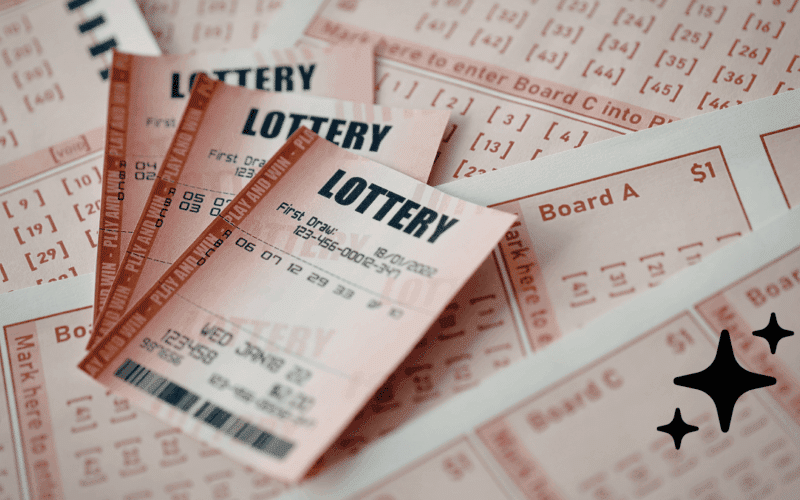
If you’ve ever stared at a lottery ticket and thought, “Surely a smart enough AI could crack this,” you’re not alone. The idea feels plausible because AI does predict a lot of things: prices, traffic, customer churn, even disease risk. In this article, we’ll answer the question, Can artificial intelligence (AI) predict lottery numbers?
Lottery numbers feel like they should be next.
Here’s the honest answer: in a properly run lottery, AI cannot reliably predict the next winning numbers in a way that gives you an edge. Not because AI is “dumb,” but because lotteries are specifically designed so that past draws don’t contain usable information about future draws.
That said, there’s a more interesting story underneath the clickbait headline, and it’s useful if you want to understand randomness, avoid scams, and use AI in ways that actually help your money.
Why people think AI can predict lottery numbers
The belief usually comes from a few very human instincts:
Pattern hunger
Our brains are wired to find meaning in noise. If you see 12 show up a few times, it feels “hot,” even if it’s just coincidence.
AI hype spillover
AI can generate text and images that look magical, so it’s tempting to assume it can “solve” any problem that involves numbers.
Confusing prediction with simulation
AI can simulate a lottery draw. It can run probabilities. It can tell you the odds. That’s not the same as predicting a specific future result.
Survivor stories
Every week, someone wins. If they used a “system,” that system gets credited, even though millions of other people used systems and lost.
The lottery is built to be unpredictable
In most lotteries, each draw is intended to be independent. That means the machine does not “remember” previous results, and the probability of a number being drawn stays the same every time.
If you have a fair 6 from 49 style lottery, the odds are fixed. Your chance of matching all six numbers does not improve because last week’s numbers were “weird,” or because 7 hasn’t appeared in a while.
If a lottery is fair, the only way to predict it better than chance would be to have information the public does not have, like a hardware defect, a biased mechanism, or insider access. Those are not “AI tricks,” they’re integrity failures.
How Lotteries Actually Work: The Wall of Randomness
To understand why AI struggles with the lottery, we have to look at how numbers are generated. Most modern lotteries use one of two methods:
- Mechanical Drawing Machines: These use physical balls (often made of solid rubber or plastic) agitated by air or gravity. Each ball is a separate physical object, and the process is designed to be as chaotic as possible.
- True Random Number Generators (TRNGs): Unlike the pseudo-random numbers your computer generates (which are based on mathematical formulas), TRNGs often use atmospheric noise, radioactive decay, or thermal fluctuations to create a result that is, by definition, unpredictable.
The key mathematical principle here is Independence. In a fair lottery, Draw A has zero influence on Draw B. If the number 17 was drawn last Wednesday, its probability of being drawn this Saturday remains exactly the same. AI models, particularly those based on machine learning, thrive on Correlation. They look for how one variable affects another. When the variables are truly independent, the AI is essentially trying to find a path through a room with no floor.
What AI can do with lottery data, and what it can’t do
AI is great at finding patterns when patterns exist. But if the data is truly random, the best model in the world will still fail, because there’s nothing real to learn.
Here’s a clear breakdown.
| Question | What people hope AI can do | What AI can actually do | What it cannot do in a fair lottery |
|---|---|---|---|
| “Can AI predict next week’s winning numbers?” | Forecast exact numbers | Generate guesses that look informed | Produce a repeatable edge over randomness |
| “Can AI find hot and cold numbers?” | Identify numbers “due” to hit | Count frequencies and visualize streaks | Prove a number is “due” if draws are independent |
| “Can AI beat the odds?” | Increase win probability | Explain probabilities and expected value | Change the math of the game without a real bias |
| “Can AI detect a rigged lottery?” | Spot manipulation | Flag anomalies, distribution issues, hardware bias signals | Confirm rigging without access to process details |
| “Can AI help me play smarter?” | Win more | Help you set limits and avoid impulse spending | Turn lottery into a profitable strategy |
The key point is simple: AI can analyze your behavior and the rules of the game far better than it can predict the draw itself.
“But AI predicts stocks, why not lottery numbers?”
Great question, because it exposes the difference between “messy systems” and “random systems.”
Markets are influenced by information, incentives, feedback loops, and human behavior. They are not purely random, even if they are very hard to forecast.
Lotteries aim to be the opposite. They aim to produce outcomes that cannot be inferred from prior outcomes. When a system is truly random and independent, prediction collapses into guessing.
That’s why the most honest “lottery number predictor” is a random number generator.
The uncomfortable truth about “AI lottery prediction tools”
If someone claims their AI can predict lottery numbers, one of these is usually happening:
They’re selling entertainment, not accuracy
Apps can make number picking feel more exciting. That’s not the same as beating probability.
They cherry pick results: AI Predict Lottery Numbers
They highlight a user who hit a small prize, and ignore the thousands who didn’t.
Moreover, use vague language on purpose
“Improve your chances” can mean “help you choose numbers,” not “increase your probability of winning.”
They rely on your misunderstanding of probability
A model can output numbers with a confident tone, and confidence feels like competence, even when it’s random.
If you remember one line from this article, make it this: confidence is not evidence.
When “prediction” becomes possible, and why it’s rare
There have been rare cases historically where people exploited weaknesses in games of chance. Usually, it was not because they “predicted” randomness, but because the randomness was flawed.
Examples of real world issues that can create a tiny edge:
Mechanical bias
If a physical ball set is worn, slightly heavier, or imperfect, it may drift from perfect uniform randomness.
RNG implementation problems
If a digital lottery uses a weak random number generator, or poor seeding, outputs can become slightly predictable.
Process weaknesses
If the draw process leaks information, or is not properly secured, someone might gain unfair access.
Even in those edge cases, what matters is not “AI magic,” it’s measurement, auditing, and access to high quality data about the mechanism. Also, exploiting a real lottery system can be illegal, and it’s not something anyone should attempt.
A smarter way to use AI, especially if money is the goal
If the real goal behind “Can AI predict lottery numbers?” is “How do I improve my financial outcome?”, AI has far better jobs it can do for you.
Here are practical ways AI can actually help:
Build a simple budget that reduces impulse spending
Track subscriptions, recurring costs, and category creep
Create a savings plan with weekly targets
Help you compare financial decisions using expected value thinking
Set guardrails, like a monthly entertainment budget cap
Turn vague goals into a plan you can follow
That’s the difference between hope and leverage.
Can AI predict lottery numbers? If you’re under the legal age, skip the lottery entirely
Lotteries are age restricted in many places for a reason. They are designed to be enticing, and they can build unhealthy money habits fast. If you’re not legally allowed to play, don’t. If you are legally allowed, treat it like entertainment, not income.
A good rule of thumb is: only spend what you’d be genuinely fine losing, without needing to “win it back.”
FAQ: what people ask Google about AI and lottery numbers
Can AI predict lottery numbers with machine learning?
Not in a fair lottery with independent draws. Machine learning needs repeatable signals, and properly run lottery draws are designed not to provide them.
Do “hot” and “cold” numbers work?
They can describe history, but they do not reliably change future odds in an independent random process.
Are lottery number generator apps legit?
They can be legit as entertainment tools, but any claim of consistent prediction should be treated as a red flag.
What is the best strategy to win the lottery?
There is no strategy that changes the odds of matching the winning numbers in a fair draw. The most “strategic” approach is simply not over spending, and not treating the lottery like a plan.
Can AI help me make money instead?
Yes, but by helping you build systems that improve your financial decisions, cut waste, and stick to a plan.
A quick checklist to avoid “AI lottery” scams
The moment you see these, close the tab:
Claims of guaranteed wins
“Proprietary algorithm” with no verifiable testing
No clear math, only testimonials
Pressure tactics, limited time offers, upsells
Requests for unusual permissions in an app
A focus on hype words instead of transparent methodology
If it sounds like a shortcut around probability, it’s probably a shortcut to your wallet.