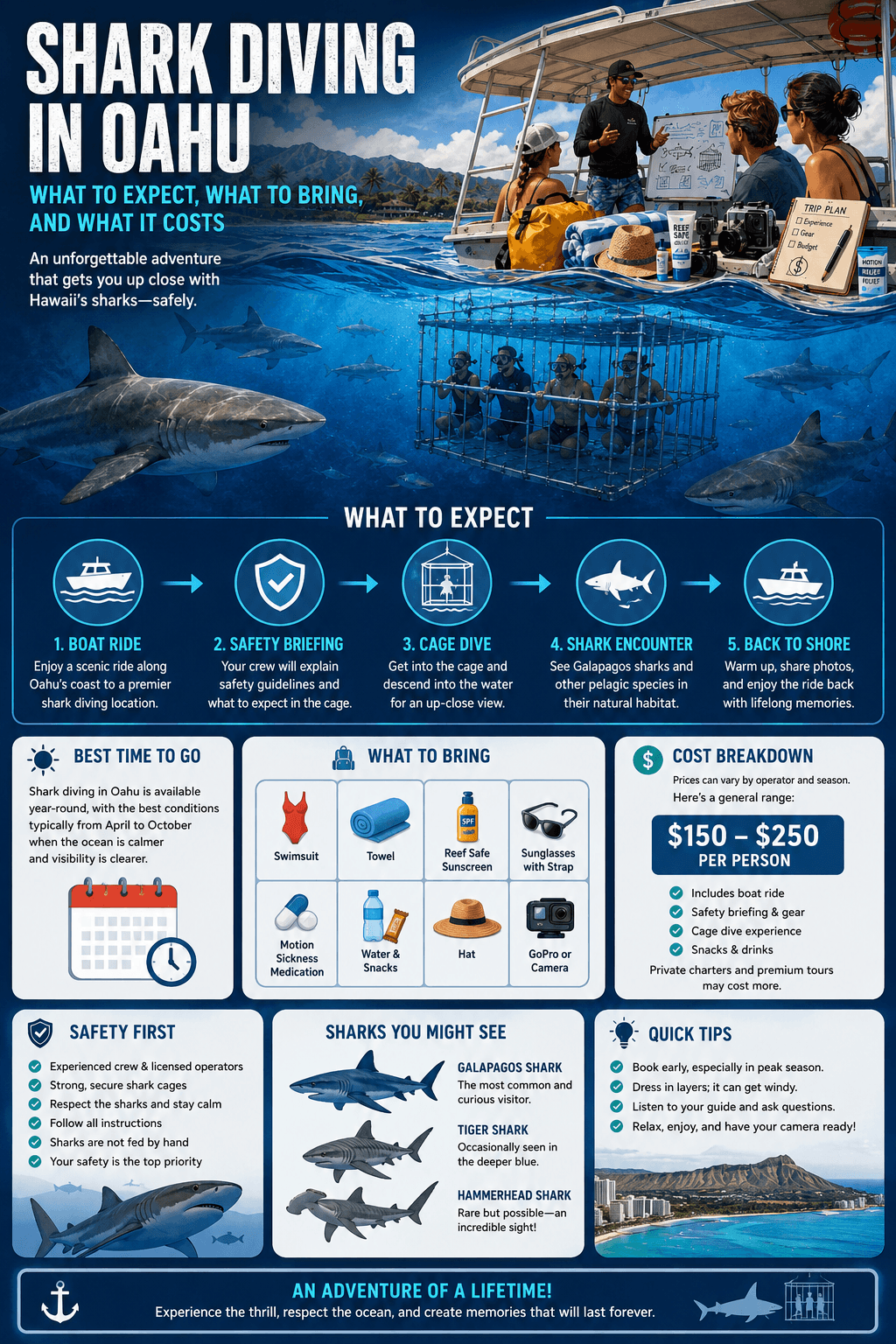
Shark Diving in Oahu: What to Expect, What to Bring, and What It Costs
Shark diving in Oahu: real costs, cage vs. no-cage, and the permit and safety questions worth asking before you book.
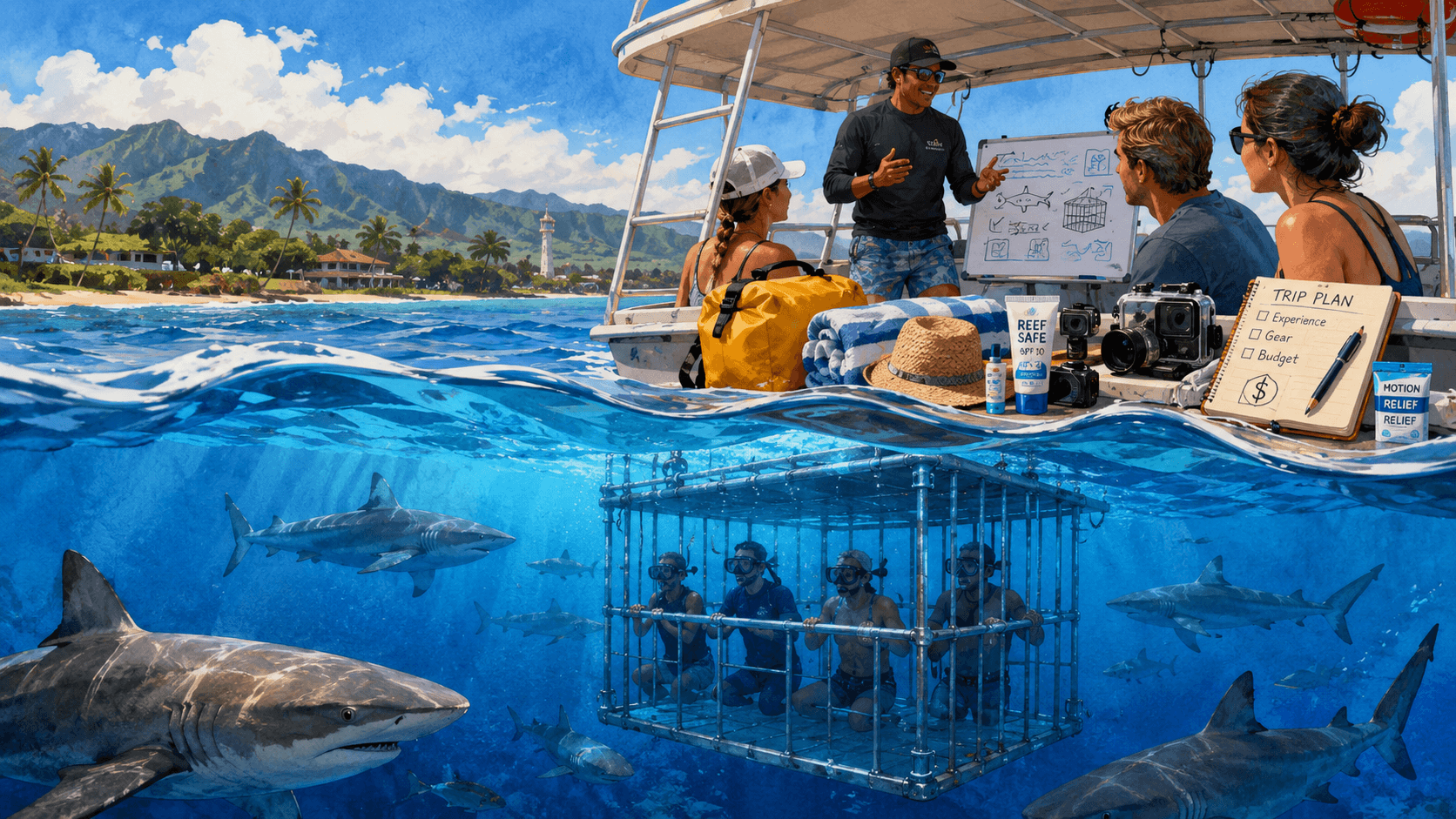
Shark diving in Oahu is one of those experiences that sounds way wilder than it usually feels. Yes, you’re getting into the ocean with sharks. No, it’s not a chaotic adrenaline movie scene. Most trips are structured, calm, and surprisingly peaceful once you settle into the rhythm of the water. In this article, we’ll explore shark diving in Oahu and answer the questions of what to expect, what to bring, and what it costs.
If you’re on the fence, this guide is for you. It’s the honest first-timer rundown: where it happens, what the day looks like, cage vs no-cage, safety basics, and the real-life factors that determine cost.
Table of contents
- Why Oahu is such a big shark diving spot
- Where shark dive tours usually leave from
- Cage vs no-cage shark diving
- Who this is perfect for (and who should skip it)
- What to bring so you’re comfortable
- Shark diving Oahu prices: what affects the cost
- Tips for getting the best experience
- Frequently Asked Questions About Shark Diving in Oahu
- Oahu Shark Diving Final thoughts
Why Oahu is such a big shark diving spot
Oahu’s North Shore has deep, open water not far offshore, which makes it ideal for shark tours. The boat ride gets you out to a blue-water environment quickly, and that’s where encounters are most common.
It also helps that North Shore operators have been doing this for a long time. The whole experience is built around repeatable procedures: briefings, a calm entry into the water, time with the sharks, and a predictable return. That structure is a big reason first-timers end up enjoying it more than they expected.
Where shark dive tours usually leave from
Most shark diving tours depart from the Haleiwa area on the North Shore. That matters for planning because it’s not a quick hop from Waikiki. If you’re staying in Honolulu, you’ll want to treat it like a half-day commitment once you factor in:
- Driving time each way
- Getting there early for check-in
- The boat ride out and back
- Buffer time for traffic
If you can, schedule it on a day when you’re already doing the North Shore. It’s the cleanest way to avoid turning your vacation into a commute. If shark diving is one stop in a bigger day of boat-based activities, island hopping around Oahu is worth planning around the same North Shore trip rather than as a separate outing.
Cage vs no-cage shark diving
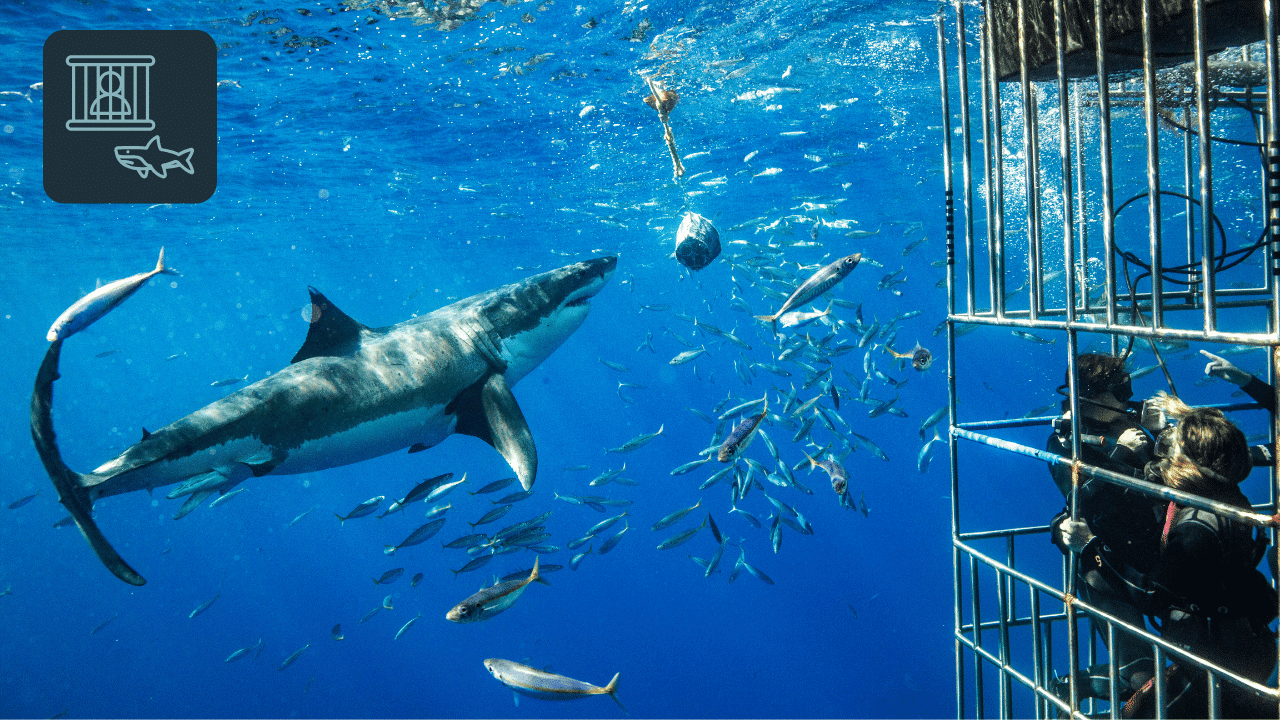
This is the first decision that shapes the whole experience.
Cage diving
Cage diving is the classic option and the one most first-timers choose. You’re in the water, but separated from sharks by a secure metal cage. It feels safe and controlled, and you still get the full “I’m in the ocean with sharks” moment.
Why people like it:
- Good for nervous swimmers
- Feels structured and predictable
- Easier to focus on watching and filming
No-cage (open water) diving
No-cage experiences are for confident swimmers and divers who want a more immersive feel. The operators that run these trips are strict about rules and conditions, and that’s a good sign. It’s not about being fearless, it’s about being calm and competent in open water.
Why people choose it:
- More freedom of movement
- Often feels more personal and quiet
- Better if you already have ocean experience
If you’re not sure, start with the cage. You can always come back for no-cage later once you know how you feel in that environment.
Checking Before You Book: Permits, Legal Shark Feeding, and What to Ask
This is the part most first-timer guides skip, and it matters more than which cage design an operator uses.
Feeding or chumming the water to attract sharks for commercial viewing is illegal under Hawaii state law, with narrow exceptions for cultural or religious practice. Hawaii’s Department of Land and Natural Resources has actively enforced this, including citing a commercial shark tour crew caught chumming water off Haleiwa. The department issues a limited number of official commercial shark tour permits, while considerably more boats than that operate out of Haleiwa on any given day.
This isn’t just a legal technicality. Marine biologists monitoring the North Shore shark tour industry have raised concerns that unauthorized feeding changes shark behavior over time and has been connected to a small number of documented shark bites on tour boats in recent years. None of this means shark diving in Oahu is unsafe as a category, reputable operators run these trips daily without incident, it means the specific operator matters more than the general activity does.
Before booking, ask directly whether the operator feeds or chums to guarantee sightings, or relies on natural behavior and known aggregation spots instead. Some of the most established operators market the second approach specifically as a selling point, which is a good sign, not a marketing gimmick.
Who this is perfect for (and who should skip it)
Great fit if you:
- Want a once-in-a-lifetime memory that feels uniquely Hawaii
- Can handle a boat ride and open water conditions
- Like wildlife experiences and don’t need total control
Consider skipping if you:
- Get severe motion sickness and hate boats
- Panic in open water environments
- Have medical concerns that make ocean activity risky
This isn’t about toughness. It’s about knowing what kind of experience you’ll actually enjoy.
What to bring so you’re comfortable
Keep it simple, but come prepared.
- Swimsuit and towel
- Light layer for the boat ride back
- Reef-safe sunscreen applied before you board
- Water and a small snack for afterward
- Motion sickness meds if needed
- Dry bag or waterproof phone pouch
- Sunglasses with a strap
Avoid bringing valuables you’ll worry about. Saltwater and wind are not gentle.
Shark diving Oahu prices: what affects the cost
Pricing varies more than people expect, and it’s not random. A few factors usually drive it:
- Cage vs no-cage: no-cage tends to be priced differently because of group size and staff requirements.
- Trip length: longer time on the water generally costs more.
- Group size: smaller groups often mean a higher per-person cost, but a more personal experience.
- Departure time and demand: prime slots can be priced differently, especially during busy travel seasons.
- What’s included: photos, wetsuits, and transport can change the total value even if the base price looks similar.
If you want a clear breakdown of typical costs and what’s usually included, this page lays it out in a way that’s easy to compare: shark dive Oahu prices.
Tips for getting the best experience
A few small choices can upgrade the whole day.
- Book earlier in your trip if you can, so you have flexibility to reschedule if conditions are rough.
- Choose morning if you’re worried about wind and chop.
- Don’t overpack your schedule afterward. Give yourself time to grab food on the North Shore and decompress.
- If photos matter to you, ask what’s offered before you go. Sometimes it’s worth paying for the pro shots so you’re not risking your phone.
Frequently Asked Questions About Shark Diving in Oahu
No wildlife experience is guaranteed, but Oahu shark tours are popular for a reason. You’re going to the right kind of water, with crews who know how to run these trips properly.
Not at all. Seeing sharks up close is still intense, even through bars. The difference is that the intensity feels manageable, not chaotic.
For cage dives, you usually don’t need to be an athlete, but you should be comfortable in water and capable of following instructions. For no-cage, you should be confident in open water.
Yes, with a reputable operator. Established companies run these trips daily with strong safety records, and the sharks commonly encountered, Galapagos and sandbar sharks, aren’t known for unprovoked aggression toward divers. The real risk factor is operators who chum or feed sharks illegally to guarantee sightings.
No. Feeding or using attractants to draw sharks for commercial viewing is illegal under Hawaii state law, with narrow exceptions for cultural or religious practice. The state has issued citations to operators caught doing it.
Ask directly whether they feed or chum to attract sharks, look for an operator that states clearly they rely on natural aggregation spots instead, and confirm they hold a valid state commercial permit rather than assuming every boat leaving the harbor is licensed.
Cage diving keeps you behind a secure metal barrier and suits nervous swimmers or first-timers. No-cage, open-water diving is for confident swimmers who want a more immersive experience and generally expects more comfort in open ocean conditions.
Most tours run roughly $100 to $300 per person, with $125 to $150 typical for a standard two-to-three hour trip. Price depends on cage versus no-cage, group size, trip length, and what’s included, like photos or transport.
No certification is required for most cage tours, since you’re snorkeling at the surface rather than scuba diving. No-cage trips generally expect more ocean confidence and comfort.
Sightings happen year-round, but many operators report stronger encounters in the cooler months, and winter trips carry a bonus chance of spotting humpback whales on the boat ride out.
Oahu Shark Diving Final thoughts
Shark diving in Oahu is one of the rare activities that lives up to the hype without being exhausting. It’s a real, visceral wildlife experience, but it’s also calm enough that you can actually absorb it.
Pick the right style, plan for the boat ride, and go in with respect for the ocean. You’ll come back with the kind of story that doesn’t need embellishment.
Infographic