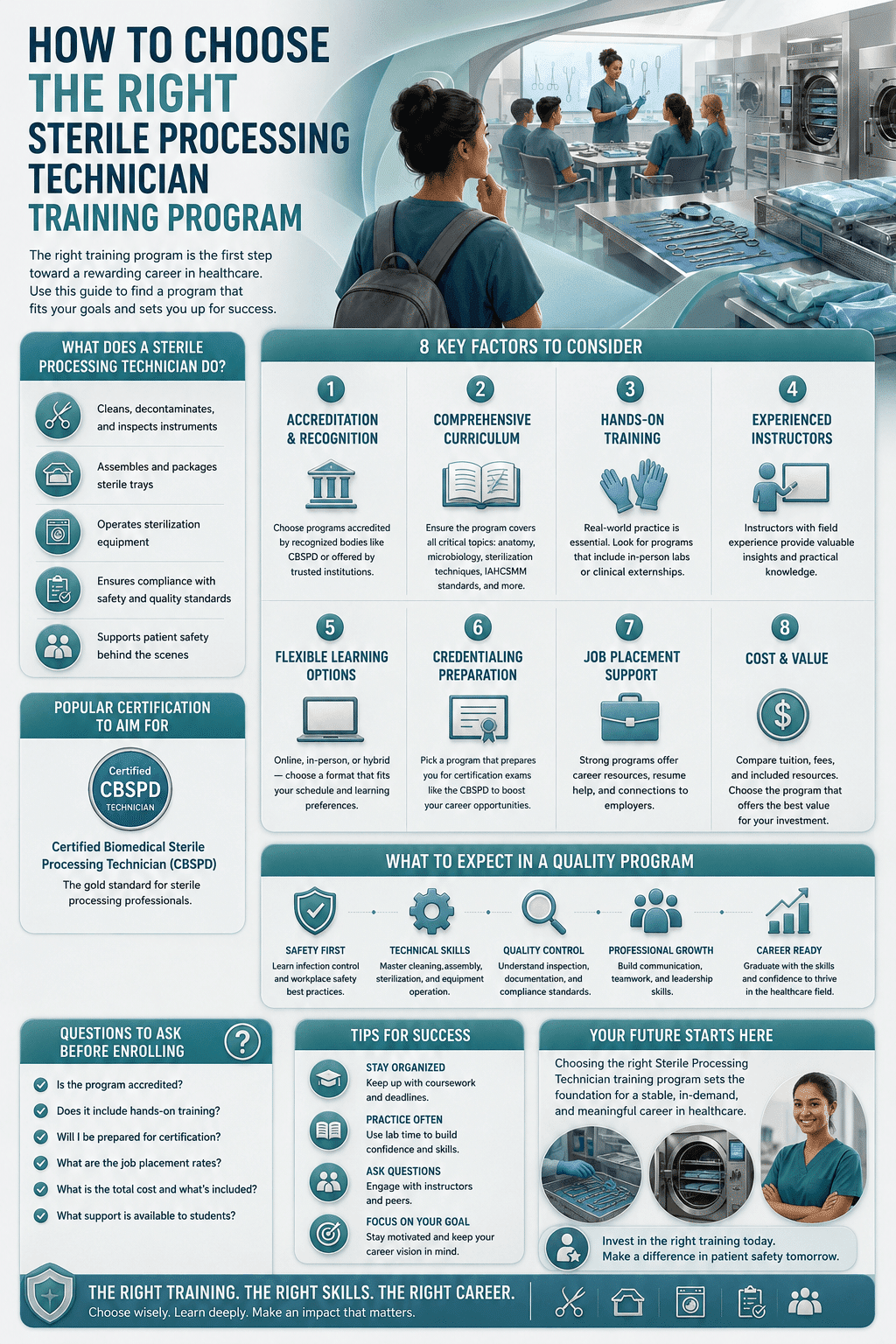
How to Choose the Right Sterile Processing Technician Training Program
How to choose a sterile processing technician training program that prepares you for the real CRCST exam, not just similar classes.
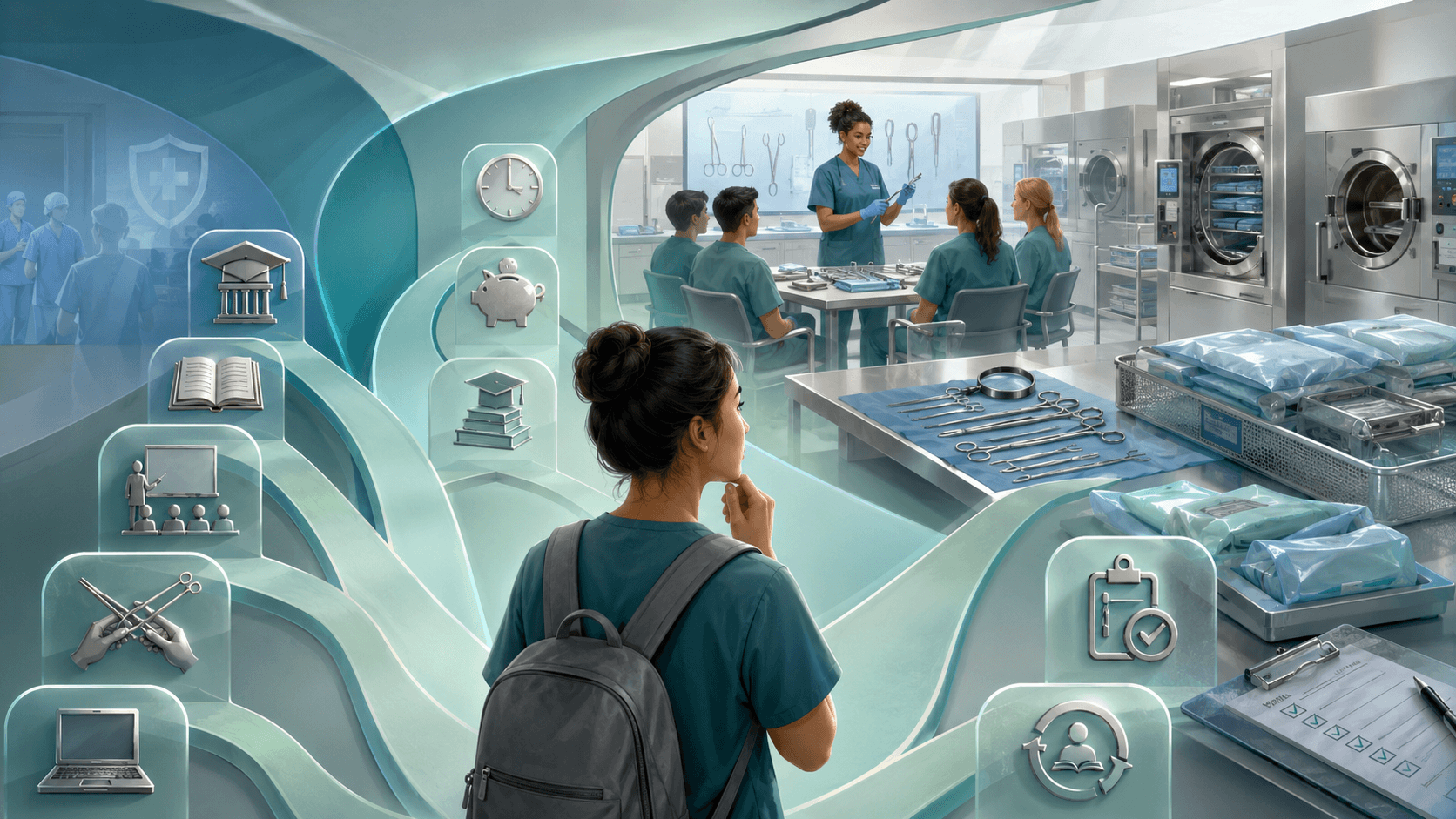
Entering a career as a Sterile Processing Technician can be a rewarding and stable choice in the healthcare field. However, with so many training programs available, it can be challenging to determine which one is the best fit for your goals and needs. The right training program not only equips you with the technical skills required but also sets you up for success in securing employment and advancing your career. In this article, you’ll learn how to choose the right Sterile processing technician training program.
Choosing the right program is an essential first step. Here’s a guide on how to choose the right Sterile Processing Technician training program, with insights into what makes certain programs stand out.
Central sterile processing classes: Key Factors to Consider
One of the most important aspects to consider when evaluating central sterile processing classes is the accreditation of the program. Accreditation ensures that the training you receive meets industry standards and prepares you for certification. Look for programs that are accredited by recognized organizations such as the Certification Board for Sterile Processing and Distribution (CBSPD) or the Healthcare Sterile Processing Association (HSPA), formerly known as IAHCSMM.
Accreditation also means that the program is regularly evaluated and updated to stay in line with the latest advancements and standards in the healthcare industry. This is crucial, as sterile processing is a highly regulated field, and keeping up with industry changes is vital for both your career and the safety of patients.
Another factor to consider when choosing central sterile processing classes is the curriculum. The best programs cover a broad range of topics, from infection control and sterilization methods to regulatory compliance and documentation practices. A comprehensive curriculum ensures that you will be equipped with the knowledge necessary to perform effectively in a sterile processing department.
Central sterile processing technician classes: What to Expect from Training
When researching central sterile processing technician classes, it’s important to understand what you’ll be learning throughout the program. Training should include both theoretical knowledge and hands-on experience. Theoretical coursework will cover essential subjects such as:
- Sterilization Methods: Understanding different types of sterilization methods, such as steam, low-temperature, and chemical sterilization, is fundamental to the role of a Sterile Processing Technician.
- Infection Control: Training in infection prevention is critical, as Sterile Processing Technicians play a key role in reducing hospital-acquired infections (HAIs).
- Instrument Handling: You’ll learn how to properly clean, inspect, and assemble surgical instruments.
- Documentation and Compliance: A significant portion of your job will involve maintaining accurate records to ensure compliance with safety and quality standards.
Hands-on training is equally important. Look for programs that offer practical experience with real sterilization equipment, as this will help you transition more smoothly into the workplace. In some programs, externships or clinical rotations are included, giving you a chance to work in a real healthcare setting and apply what you’ve learned in the classroom. The underlying question is the same one worth asking of any technical training program built around safety-critical equipment: does the curriculum actually cover compliance and hazard awareness, or just the mechanical steps.
The Certification This Training Actually Leads To: CRCST
Before evaluating any program, it’s worth knowing exactly what credential you’re training for, since getting this wrong can mean choosing a program that doesn’t actually prepare you for the right exam.
The standard entry-level credential in this field is the Certified Registered Central Service Technician (CRCST), issued by the Healthcare Sterile Processing Association (HSPA), formerly known as IAHCSMM before the organization rebranded. To sit for the CRCST exam, candidates need either 400 hours of hands-on sterile processing experience completed within five years before applying, or the same 400 hours completed within six months after passing the exam. The exam itself is computer-based, 150 multiple-choice questions, with a three-hour time limit, and certification renews annually with 12 continuing education credits required each year.
When evaluating a training program, the question worth asking directly is whether the curriculum maps to HSPA’s CRCST knowledge domains and whether the program helps track the required 400 hours, not just whether it uses similar-sounding terminology.
Not every program marketing itself with sterile processing keywords is actually accredited by HSPA or CBSPD, so it’s worth verifying the claim directly rather than taking a program’s own website at its word. HSPA publishes information on CRCST-eligible programs through its own site, confirming a specific program there before enrolling takes a few minutes and avoids paying for training that doesn’t actually qualify you for the exam.
Running any specific program, like central sterile processing classes, through those two questions directly, curriculum alignment and 400-hour tracking, is a more useful evaluation than comparing marketing pages against each other.
What This Training Actually Leads To
Choosing a program is only half the decision, worth pairing with a realistic picture of where it leads.
Sterile Processing Technician Training, Job Outlook and Salary Insights covers this directly: the field is tracked under the Medical Equipment Preparers occupational category, with 10% projected growth from 2024 to 2034 and a national mean wage around $47,000 to $49,000, higher in states like California. That context is worth reading before committing to a specific program’s cost and timeline.
Duration and Flexibility: Online vs. In-Person Training: Choose the Right Sterile Processing
Sterile Processing Technician programs vary in length. Some programs can be completed in as little as 6 months, while others may take up to a year to complete. When choosing between programs, consider how quickly you’d like to enter the workforce. Shorter programs often focus more on the essentials and provide rapid entry into the field, while longer programs may offer more in-depth training or specialized instruction.
The format of the program is also something to think about. Many students prefer the flexibility of central sterile processing technician classes that are offered online or in a hybrid format. Online courses allow you to study at your own pace and balance other responsibilities, such as work or family commitments, such as work or family commitments. However, if you’re someone who thrives in a classroom setting or prefers hands-on learning, an in-person program might be the better choice.
Some hybrid programs offer the best of both worlds, combining online coursework with hands-on experience in labs or externship opportunities. This gives you flexibility while still providing the practical skills you need to succeed.
Cost and Financial Aid
Real numbers vary by format: short, self-paced certificate programs typically run $1,000 to $8,000 total, while full associate degree programs run $10,000 to $30,000 and take 18 to 24 months, though that longer path usually isn’t required for entry-level roles. The number worth comparing across programs isn’t the advertised tuition alone, it’s the total cost including registration fees, textbooks, uniforms, and the certification exam fee, since some programs bundle the exam cost in and others charge it separately.
Central sterile processing technician classes are generally affordable compared to other healthcare programs, though costs can vary significantly depending on the school, location, and format of the program. Be sure to research the cost of tuition, fees, and any additional expenses, such as textbooks, uniforms, or certification exam fees.
Look for programs that offer financial aid or payment plans. Many schools have partnerships with local employers who may offer scholarships. Tuition reimbursement, or job placement assistance for students completing the program. Some programs also provide financial counseling to help you plan for the cost of your education.
Choose the Right Sterile Processing: Job Placement and Career Services
One of the most important considerations when choosing a central sterile processing technician classes program is the support it offers for job placement and career development. Many programs have established relationships with hospitals, surgical centers, and other healthcare facilities, which can help streamline your transition from education to employment.
Look for programs that offer job placement assistance, resume building, and interview preparation. Some programs even offer job fairs or networking events where you can meet potential employers. Research the program’s success rate in helping graduates secure jobs in the field to ensure that you’re investing in a program that will set you up for long-term success.
Certification and Continuing Education
Upon completion of central sterile processing technician classes, you’ll typically need to pass the CRCST (Certified Registered Central Service Technician) exam, the standard entry-level credential in this field. Certification is a vital part of your career and enhances your job prospects. Be sure to choose a program that prepares you for the certification exam by covering the key areas of knowledge required.
In addition to initial certification, continuing education is important in sterile processing. The healthcare field is constantly evolving, with new technologies and standards emerging regularly. Many programs offer continuing education courses or provide information on professional development opportunities to help you stay up-to-date and advance in your career.
Final Thoughts: Choosing the Right Sterile Processing Technician Training Program
Choosing the right central sterile processing technician classes is a critical step in your career as a Sterile Processing Technician. Make sure to consider factors such as accreditation, curriculum, training format, cost, and job placement assistance when making your decision. Whether you choose an online or in-person program. So, ensure that it provides comprehensive training that aligns with industry standards and prepares you for certification.
By selecting the right program, you’ll be setting yourself up for a rewarding and stable career in healthcare, one where you can contribute to patient safety, reduce the risk of infections, and enjoy long-term job security.
Frequently Asked Questions About Sterile Processing Technician Training Programs
The standard entry-level credential is CRCST (Certified Registered Central Service Technician), issued by HSPA. A good program’s curriculum should map directly to HSPA’s CRCST knowledge domains, not just use similar terminology.
IAHCSMM rebranded to the Healthcare Sterile Processing Association (HSPA) some years ago. The organization and its CRCST credential are the same body, just under a current name.
CRCST requires 400 hours of hands-on sterile processing experience, completed either within the five years before applying for the exam, or within six months after passing it.
Programs typically run 6 months to a year, depending on whether it’s a condensed, essentials-only track or a longer program with more in-depth instruction and clinical rotations.
It depends on your learning style and whether the program includes real hands-on components, either through labs or externships. A hybrid format is often the practical middle ground, since sterilization work is inherently hands-on.
It’s generally lower-cost than many healthcare training programs, though exact tuition varies by school, format, and location. Ask specifically about financial aid, payment plans, and employer-sponsored scholarship partnerships before comparing programs on price alone.
Both are recognized accrediting and certifying bodies in sterile processing, and either credential is generally accepted by employers. The more important factor is confirming a specific hospital or employer’s preference before choosing.
Infographic