The Comeback of Compact Cameras: Why Shooting More and Scrolling Less Improves Your Life
In recent years, compact digital cameras often called point-and-shoots have experienced a strong revival. Once replaced by smartphones, these small devices are now trending again among creators and everyday users. But this shift is not only about photography. It’s about improving focus, reducing screen time, and building a healthier lifestyle. In this article, we’ll explore […]
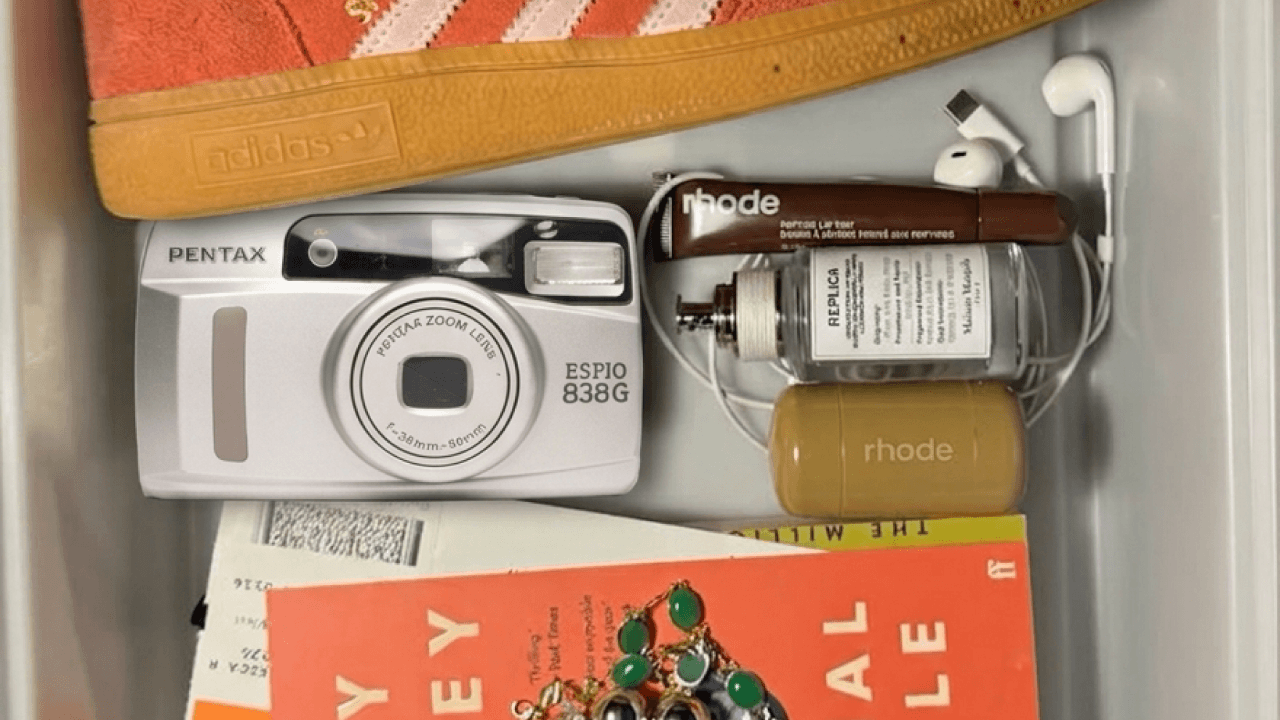
In recent years, compact digital cameras often called point-and-shoots have experienced a strong revival. Once replaced by smartphones, these small devices are now trending again among creators and everyday users. But this shift is not only about photography. It’s about improving focus, reducing screen time, and building a healthier lifestyle. In this article, we’ll explore the comeback of the compact cameras trend and understand why shooting more and scrolling less improves your life.
If you’re looking to explore high-quality compact cameras, check out sesko.store. In addition, a curated store focused on unique and reliable camera gear.
A quick note before we call this a “digital detox”
Using a compact camera can help some people spend less time on their phones, but it is not a cure for stress, anxiety, poor sleep, or attention problems.
Think of it as a small habit change.
Instead of reaching for a device built for everything, you reach for a tool built for one thing. That can make photography feel calmer, less performative, and more personal.
A camera will not fix your relationship with technology on its own. But it can create a little space between seeing a moment and turning it into content.
That space is where the magic is.
Why Compact Cameras Are Becoming Popular Again
Smartphones made photography accessible, but they also introduced constant distractions: notifications, social media, and endless scrolling. A compact camera removes all of that.
When you use a point-and-shoot camera, you focus on one task. So, capturing the moment. No interruptions. No dopamine loops.
Popular models like Canon PowerShot, Sony Cyber-shot, and Nikon Coolpix are now востребовані again because they offer a simple and intentional shooting experience.
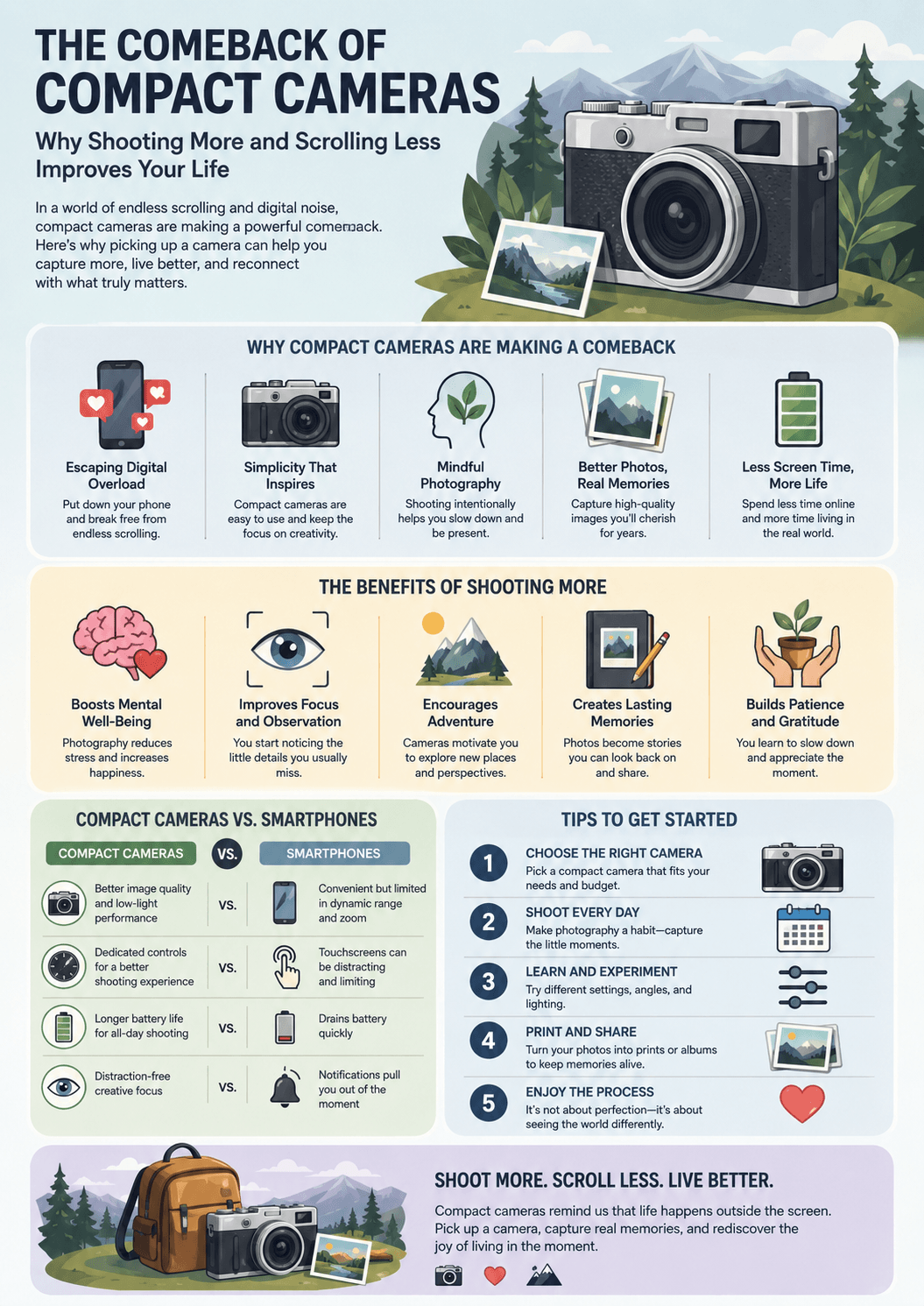
Less Phone Usage = Better Mental Health
Scientific studies in digital behavior show a clear connection between excessive smartphone use and mental fatigue. High screen time is associated with:
- Increased anxiety
- Lower attention span
- Poor sleep quality
By switching to a dedicated camera, you automatically reduce time spent on your phone. This creates a natural “digital detox” without forcing yourself to disconnect completely.
The Science Behind Focused Photography and Compact Cameras
Using a camera activates what psychologists call focused attention a mental state similar to mindfulness.
Instead of reacting to notifications, your brain:
- Observes light, composition, and details
- Processes visual information deeply
- Stays present in the moment
This reduces cognitive overload and helps stabilize mood. In simple terms: photography with a real camera slows your mind down in a healthy way.
Photography can become a small mindfulness practice
Mindful photography is not about taking perfect pictures.
It is about noticing.
Light on a wall. A person laughing before they pose. A table after dinner. Clouds moving across a window. The shape of a street corner you pass every day but never really see.
A compact camera can support that because it gives your hands something simple to do while your attention stays with the scene.
Try this:
- Take one short walk with only the camera.
- Do not check the photos until you get home.
- Look for color, shape, reflection, shadow, and small human details.
- Take fewer photos than usual.
- Keep the ones that remind you how the day felt, not only the ones that look polished.
This turns photography into a way of paying attention, not just collecting images.
Intentional Creativity Over Endless Content

Smartphones encourage quantity take hundreds of photos, post instantly, scroll endlessly.
Compact cameras encourage quality:
- You think before you shoot
- You value each frame more
- You develop a stronger creative eye
This aligns with the idea of digital minimalism. So, using technology with purpose instead of habit.
A Simple Way to Rebalance Your Life
Replacing even part of your smartphone usage with a compact camera can lead to noticeable changes:
- Less dependence on social media
- Better concentration in daily tasks
- More enjoyment of real-life moments
It’s a small shift, but it creates long-term benefits.
Compact camera versus smartphone: which one should you use?
This is not a war between phones and cameras. Both are useful.
A smartphone is better when you want convenience, quick sharing, strong computational photography, night mode, weather resistance, and video tools in one device.
A compact camera is better when you want fewer distractions, real controls, optical zoom, a separate photo archive, a different look, and a more focused shooting experience.
Here is a simple comparison:
| Feature | Smartphone | Compact camera |
|---|---|---|
| Convenience | Always with you | Needs to be carried |
| Distraction level | High | Low |
| Sharing | Instant | Later |
| Controls | Touchscreen first | Buttons and dials |
| Zoom | Often digital or limited optical | Often stronger optical zoom |
| Photo style | Clean and processed | More camera like, sometimes less polished |
| Privacy | Connected to apps and accounts | Separate device |
| Best for | Everyday convenience | Intentional shooting |
Compact Cameras Conclusion
The return of compact cameras is more than a trend. It’s a response to digital overload. By choosing a dedicated photography tool, you reduce distractions, improve focus, and reconnect with reality.
If you want to start this shift today, explore carefully selected cameras at Sesko and experience photography the way it was meant to be simple, intentional, and rewarding.
