



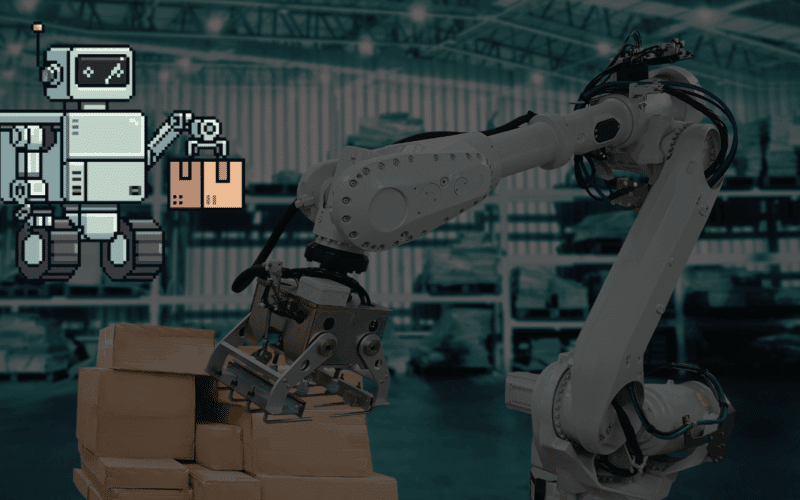
The robotics industry is transitioning from experimental innovation to industrial-scale deployment. Humanoid platforms are moving beyond lab demonstrations. Autonomous mobile robots are operating in live warehouses. Collaborative robotic arms are being integrated into mixed human-machine production lines. AI-driven perception stacks are becoming standard rather than optional. In this article, we’ll explore the engineering robotics intelligence layer and understand why structured technical tools are essential for the next automation age.
But as the hardware becomes more sophisticated and deployment expands, one problem becomes increasingly clear: robotics lacks standardized analytical infrastructure.
Unlike software ecosystems. So, where benchmarks, performance metrics, open documentation, and version tracking are deeply embedded into the culture, robotics remains fragmented. Specifications are inconsistent. Performance claims vary in measurement methodology. Battery capacity, torque output, actuator density, payload tolerance, or deployment readiness are often reported without shared baselines.
As robotics scales into a trillion-dollar industrial domain, this fragmentation becomes a structural bottleneck.
The Shift from Demonstration to Deployment
Robotics has historically operated in a demonstration cycle: unveil a prototype, publish a technical video, highlight a milestone. But deployment introduces different constraints:
- Thermal stability under continuous load
- Battery degradation after repeated charge cycles
- Mean time between failures (MTBF)
- Maintenance interval economics
- Spare part supply chain stability
- Real-world uptime under unpredictable environments
Once robots enter production environments, narrative marketing becomes irrelevant. What matters is operational performance.
Yet there is no standardized way for engineers, investors, or procurement teams to compare systems across vendors.
Robotics as a Multidimensional System: Structured Technical Tools
Modern robotics systems are not single-layer products. They are multidimensional architectures composed of:
- Mechanical structure
- Actuation systems
- Energy storage
- Embedded computing
- Sensor arrays
- Control algorithms
- AI integration layers
- Cloud or edge synchronization frameworks
Evaluating such systems requires structured, layered comparison.
For example, a humanoid robot’s mobility performance cannot be assessed independently of battery energy density and actuator efficiency. Similarly, dexterity metrics are meaningless without control latency data and sensor fidelity transparency.
Yet most public documentation reduces robotics systems to a handful of headline numbers.
Technical Benchmarking: The Missing Layer
In computing, benchmarking is fundamental. CPUs are compared via clock speed, core count, power draw, and standardized stress tests. GPUs are evaluated by FLOPS, memory bandwidth, and thermal performance.
Robotics has no equivalent universal benchmark suite.
Instead, performance is described inconsistently:
- “Human-like agility”
- “Industrial-grade torque”
- “High-density battery architecture”
- “Advanced AI integration”
These phrases lack quantifiable alignment across platforms.
A structured robotics intelligence layer must normalize such variables into comparable categories.
Humanoid Robotics: The Highest Complexity Domain Structured Technical Tools
Humanoid systems represent the most complex robotics architecture currently being commercialized. Unlike fixed industrial arms, humanoids must balance:
- Bipedal locomotion stability
- Dynamic load balancing
- Upper-body manipulation
- Energy efficiency under motion
- Compact actuator packaging
- Integrated AI-driven perception
Comparing humanoid platforms requires evaluating:
- Degrees of freedom (DoF)
- Actuator type (harmonic drive, cycloidal, direct drive)
- Peak torque output
- Battery watt-hours
- Battery energy density (Wh/kg)
- Operational endurance under load
- Sensor stack configuration
- Compute architecture (onboard vs. hybrid cloud)
- Projected manufacturing cost at scale
Without standardized comparison tools, evaluating competitive positioning becomes speculative.
Platforms such as RoboChronicle Tools aim to structure robotics specifications into consistent benchmarking formats, enabling side-by-side analysis across systems and manufacturers.
Battery Architecture and Energy Constraints
Energy storage is one of the primary limiting variables in mobile robotics.
Key parameters include:
- Total battery capacity (Wh)
- Energy density (Wh/kg)
- Charge cycle durability
- Thermal runaway risk mitigation
- Swappable battery compatibility
Humanoid robots, in particular, operate within strict weight-to-endurance trade-offs. Increasing battery capacity improves runtime but negatively impacts mobility efficiency and actuator load.
Comparing energy systems across platforms requires consistent reporting standards — something rarely available in raw company announcements.
Actuation Systems and Mechanical Efficiency Structured Technical Tools
Actuators define robotic performance.
Modern systems may employ:
- Harmonic drives for precision torque
- Cycloidal reducers for durability
- Direct-drive motors for responsiveness
- Custom proprietary hybrid mechanisms
Each approach presents trade-offs in weight, efficiency, backlash tolerance, and manufacturing complexity.
Without structured categorization of actuator density (torque-to-weight ratio) and thermal tolerance, comparisons remain superficial.
AI Integration: Hardware Meets Foundation Models
The convergence of AI and robotics introduces additional analytical complexity.
Key AI-related variables include:
- Onboard compute power
- Edge processing capability
- Cloud dependency latency
- Vision model integration
- Reinforcement learning deployment cycles
- Sim-to-real training pipelines
Robotics companies increasingly integrate large-scale foundation models to improve perception and task generalization.
But these integrations differ dramatically in architecture and compute load.
Structured tools must capture not only mechanical specifications, but AI stack maturity.
Manufacturing Scalability and Cost Curves Structured Technical Tools
Technical excellence does not guarantee scalable production.
Robotics deployment depends on:
- Component sourcing concentration
- Vertical integration levels
- Precision machining capacity
- Assembly automation maturity
- Yield rates at production scale
Projected unit cost at 1,000 units differs significantly from projected cost at 100,000 units.
Investors and procurement teams require structured insight into manufacturing readiness — not prototype performance alone.
Industrial Robotics: Mature but Under-Analyzed
Industrial robotics operates at large scale globally, yet comparative analysis remains limited outside specialized engineering circles.
Key metrics include: Engineering the Robotics Intelligence Layer
- Repeatability tolerance (± mm)
- Cycle time
- Payload capacity
- Reach radius
- IP rating for environmental durability
- Maintenance interval frequency
Standardizing these categories across manufacturers increases procurement transparency and competitive efficiency.
Autonomous Mobile Robots (AMRs): Fleet Intelligence
Warehouse automation increasingly relies on AMRs operating in coordinated fleets.
Analytical comparison requires:
- Navigation stack architecture
- SLAM system robustness
- Obstacle detection latency
- Fleet coordination protocol
- Battery swap efficiency
- Docking precision reliability
Structured tools allow logistics operators to evaluate deployment suitability across varied facility layouts.
Supply Chain Transparency Structured Technical Tools
Robotics systems depend on global component ecosystems.
Key exposure areas include:
- Semiconductor fabrication regions
- Rare earth magnet sourcing
- Precision gearbox manufacturing hubs
- Battery cell suppliers
Geopolitical tension and trade regulation shifts make supply chain mapping essential for risk analysis.
Structured intelligence tools can document sourcing transparency where available.
Standardization as Competitive Infrastructur
As robotics adoption scales, industry participants will demand standardized reporting.
Standardization enables: Engineering the Robotics Intelligence Layer
- Fair competitive comparison
- Clearer regulatory assessment
- Reduced procurement friction
- Improved capital allocation
- Longitudinal performance tracking
Without structured benchmarking, robotics risks inefficiency driven by narrative asymmetry.
The Evolution Toward Robotics Data Platforms
Future robotics ecosystems will likely include: Engineering the Robotics Intelligence Layer
- Live performance dashboards
- Version-tracked hardware specifications
- Energy consumption simulation models
- Total cost of ownership calculators
- Actuator efficiency comparison modules
- Deployment heatmaps by region
Such tools move robotics intelligence from static articles to dynamic analytical infrastructure.
Engineering Culture and Transparency
Software engineering matured through open benchmarking culture. Robotics may follow a similar trajectory.
Transparent technical documentation accelerates industry learning curves and improves ecosystem stability.
Structured robotics tools are not promotional platforms. SSo, they are infrastructure for technical clarity.
Conclusion: Building the Robotics Intelligence Layer
The robotics sector is entering a structural expansion phase. Humanoid deployment, warehouse automation, collaborative robotics, and AI-driven manipulation systems are converging.
As complexity increases, so does the need for analytical discipline.
Structured benchmarking, standardized specification tracking, and transparent comparative tools will define the next era of robotics evaluation.
Physical intelligence is scaling globally. Informational intelligence must scale with it.
The future of robotics will not be defined only by machines moving autonomously through factories and cities — but by how precisely we measure, compare, and understand them.