A Paper Bird Takes Flight in a Seedance Prototype
A blue paper bird lifts from the desk and drifts toward the window, turning a simple sketch into a quiet cinematic idea.
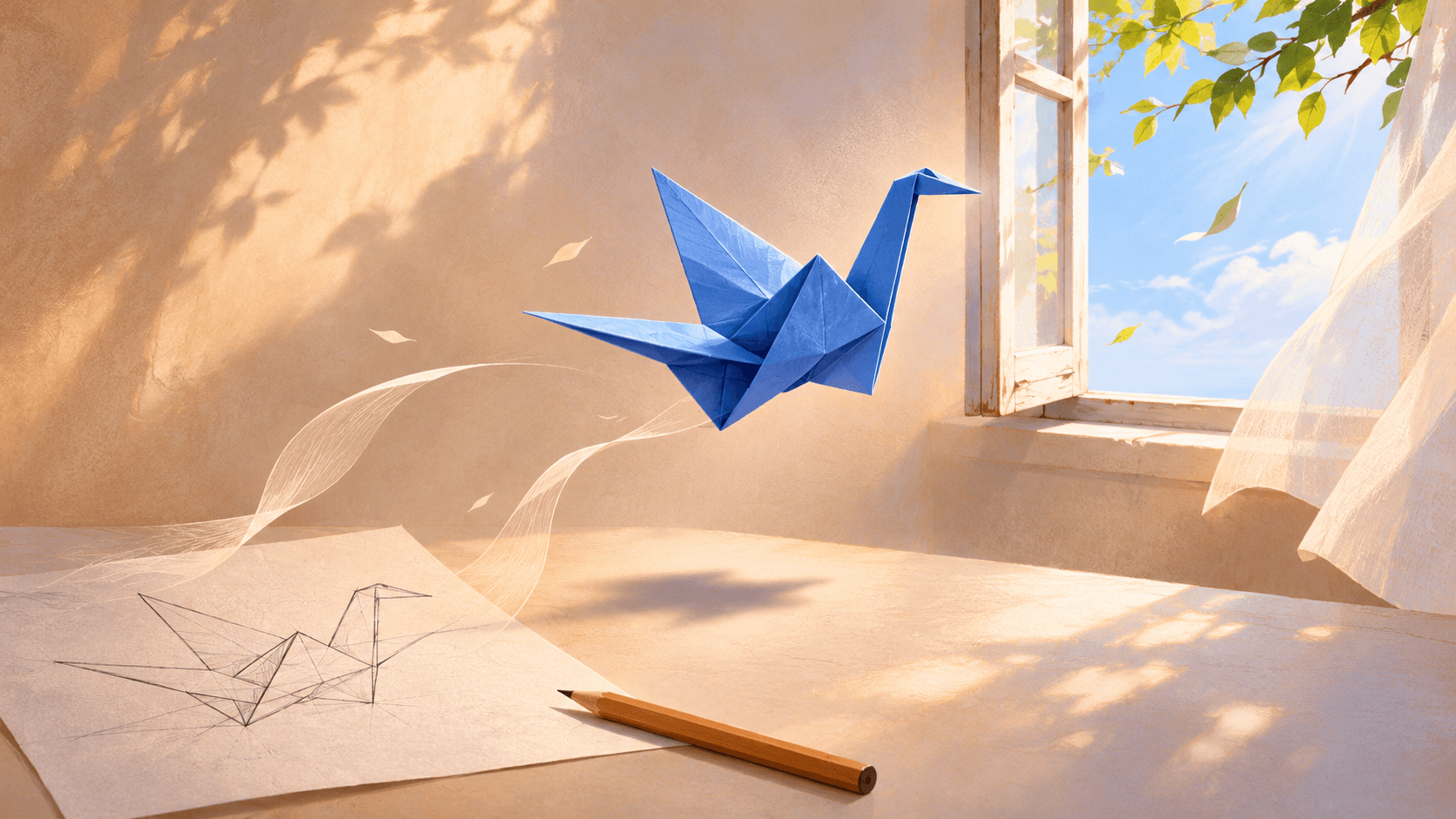
The paper bird should leave the desk without turning into a real bird. That would be my central constraint for a short concept film introducing a fictional creative notebook app. A folded blue crane sits beside an unfinished sketch, rises a little, and travels toward an open window. The movement suggests an idea becoming something tangible, while the paper texture keeps the scene connected to the work on the desk.
I would begin with an original photograph of a handmade crane and a simple drawing of the room. The reference would show the folds clearly, especially the long crease along the wing. A model cannot preserve a design that the source image barely reveals. I would choose a plain desk and leave enough empty space above it for the proposed movement, rather than asking the shot to discover an entirely new room.
An experiment with Seedance would let me explore that transition as AI-generated video before deciding whether it belongs in the app’s introduction. The model would contribute the imagined movement, not a demonstration of software features. I would keep the actual interface in a separate screen recording. That distinction gives the opening some personality without suggesting that the app itself animates drawings or creates video.
Give the First Fold a Clear Silhouette
My first composition would place the crane against a warm, plain wall. The blue paper would stand apart from both the background and the pale desk. I would avoid a patterned wallpaper or a crowded collection of stationery, because the viewer needs to recognize the object before it begins to move. A single pencil beside the sketch would provide enough context.
The camera would remain fixed for the first attempt. A crane lifting away from a desk already creates a change in position, perspective, and shadow. Adding a camera orbit would multiply the number of things that need to remain coherent. I would rather understand the object’s motion in a stable frame before considering a more elaborate shot.
The brief would describe a folded paper crane rising gently, keeping its angular folds and matte paper surface, with soft daylight from the window. I would explicitly avoid feathers, organic wings, or a living bird. In this Seedance concept, the paper identity is the whole point. A realistic animal might be impressive, but it would tell a different story.
Decide What Flight Means for Paper
I would not ask the crane to flap like a pigeon. Its folds suggest a rigid object, so an exaggerated wing movement could make the paper look rubbery. A small lift followed by a smooth drift would be a better starting point. The scene is intentionally fantastical, but the material can still behave consistently within that fantasy.
The shadow would help establish the lift. At the beginning, it should sit close beneath the crane; as the object rises, the separation should become visible. I would not describe exact physical measurements in the prompt unless the workflow supports that level of control. Instead, I would make the intended visual relationship clear and inspect whether the resulting image communicates it.
If the first Seedance draft jumps straight from resting to floating, I would revise the opening action. A brief still moment followed by a gradual rise could give the viewer time to understand what is happening. I would keep the lighting and framing unchanged so the revision addresses the missing transition rather than producing an unrelated new scene.
Find the Moment Where the Object Stops Being Itself
The most important review would happen around the crane’s first movement. I would watch the neck, wing tips, and tail, looking for parts that merge or change length. A beautiful background cannot compensate for a paper object that becomes a different shape halfway through the shot. The viewer’s attention is already concentrated on those edges.
If the far wing repeatedly changes, I would revise the reference to make its outline less ambiguous. A slightly different starting angle might show both wings without requiring the model to infer a hidden fold. I would avoid solving the problem by simply making everything darker. The crane needs to remain readable for the concept to work.
Another possible revision would shorten the flight path. The crane might only rise above the sketch and drift toward the edge of the frame, leaving the window as an implied destination. Seedance would then have less unseen space to construct. This smaller action could still express the idea becoming mobile, especially when the following edit connects it to a real drawing in the app.
Make the Cut Do Some of the Storytelling
I would plan the transition into the screen recording before generating many versions. The crane’s blue shape could match a blue sketch layer in the actual interface, but only if that layer genuinely exists in the demonstration. I would record a simple, real interaction such as opening the sketch or moving between pages, then choose the point where the visual connection feels natural.
The generated scene would not need to transform directly into a computer screen. A clean cut can make the relationship clearer than a complicated morph. The viewer sees an imagined idea taking flight, then sees the practical workspace where a person develops ideas. Each shot has a distinct role, and neither needs to imitate the other.
For the Seedance clip, I would keep a little extra stillness at the end if the output allows it. That gives the edit somewhere to breathe before the interface appears. If the strongest material ends during a quick movement, I would trim earlier and use a shorter opening. The length should follow the usable action rather than a predetermined ambition to fill several seconds.
Add Words After the Image Has Spoken
Any title or product name would be added in the editing software. I would not ask the generated paper or sketch to carry essential lettering. The exact spelling of an app name matters, and a small caption can remain perfectly legible when it is composed separately. A plain closing card would be enough for this prototype.
The sound could begin with a subtle paper rustle recorded specifically for the project, followed by a quiet musical phrase that I have permission to use. I would avoid a loud magical sparkle. The scene already contains an impossible action, and understated sound would keep it from becoming a cartoon. I would also watch the edit without audio to check whether the lift and transition remain understandable.
If I shared the concept publicly, I would identify the opening as AI-generated and avoid presenting it as footage from a finished campaign. This is a proposed creative workflow, not a report of testing or client results. The screen recording would show real software behavior, while the paper bird would remain an openly imaginative introduction.
Leave the Prototype with One Useful Answer
The completed exercise should answer whether the paper-flight idea suits the product’s tone. If the crane feels delicate and considered, it may work for a quiet creative notebook. If it feels frantic or overly theatrical, the concept needs revision even if individual frames look attractive. Technical polish and editorial fit are different questions, and both matter.
I would retain the reference image, prompt versions, and selected clip together so the reasoning behind the final edit remains clear. The value of Seedance here would be the chance to explore a specific visual action and refine it around a recognizable material. The paper bird does not have to cross an entire room. It only has to leave the desk in a way that makes the next shot feel worth watching.
